
Method
Very often, in popular concept, the slow martial movements of Taichi Chuan are what is commonly referred to as Taichi.
Although they may be part of the Taichi study program, they are just a part of it. Just a tool, part of a larger layout — the most visible or appealing maybe — but still just a component of the Path of Taichi.
What makes our human experience possible is the combination of a body, a mind, and something that gives life to the body and connects it with the mind. It is sometimes referred to as energy or breath.
So through the study of conventional (tangible) Truth — that is the study and development of the body, the study and development of the breath and the study and development of the mind — we will get a chance to experience Ultimate Truth.
To do so we are going to use a variety of practices and tools, many of them having their origin or having been integrated into the Art of Taichi Chuan — the Taichi fist or Taichi martial art.
Taichi
The word Taichi translates as "The Great Ultimate." It is made of two words where Tai is translated as "Great, Grand or Supreme" and Chi is translated as "Ultimate". It can also be understood as "The source of all things."
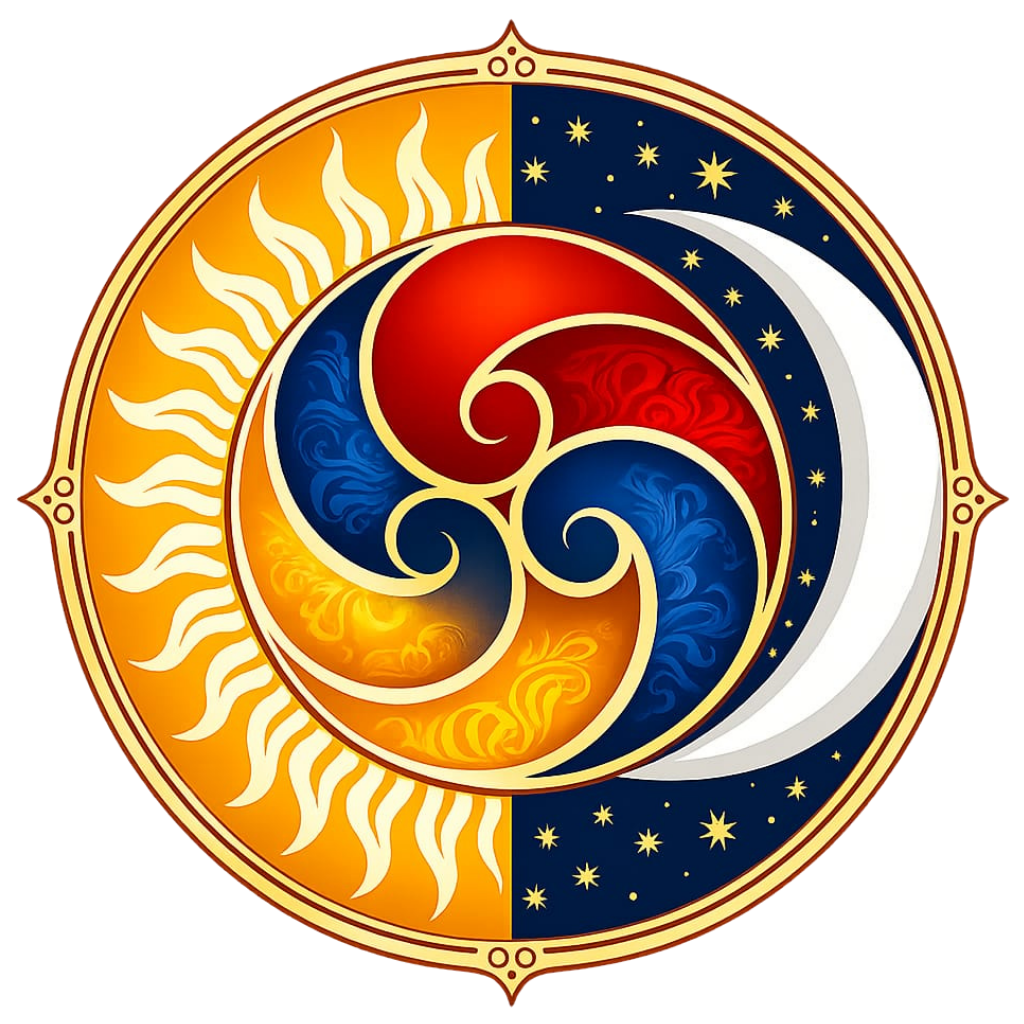
It is well known and represented by the Yin–Yang symbol. Hence the study of Taichi can be said to be the study of Yin and Yang, that is the world of duality — the world we live in.
The Path of Taichi is also called the Path of Balance. Through the study of the two opposite forces we learn how to observe them, how to differentiate them, and from there we can head towards a state of balance.
Through the knowledge and the balancing of the two forces — Yin and Yang — the experience of Wuchi becomes possible. Wuchi can be translated as "which has no pole", "non-polar", "the ultimate of nothingness", or simply "nothingness."
Purpose
The purpose of the practice of the Path of Taichi is to understand Ultimate Reality, to experience Ultimate Truth and finally to be merged, to be one with it continuously.
This is made possible through the study of mundane or conventional truth — that is the study of the world we live in, the world of duality, the world of Yin and Yang, using the tools our human condition provides us with: body, mind and breath.
So from the understanding of duality we open a possibility to experience non-duality. From the study of Isness (what is) we open a possibility to experience Nothingness.
That is both intellectually logical and simple to understand.